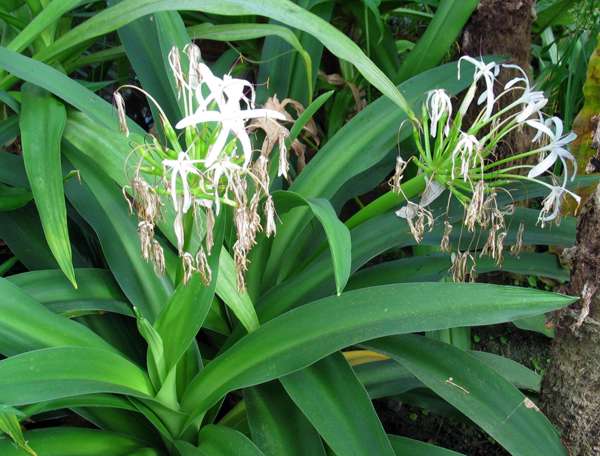
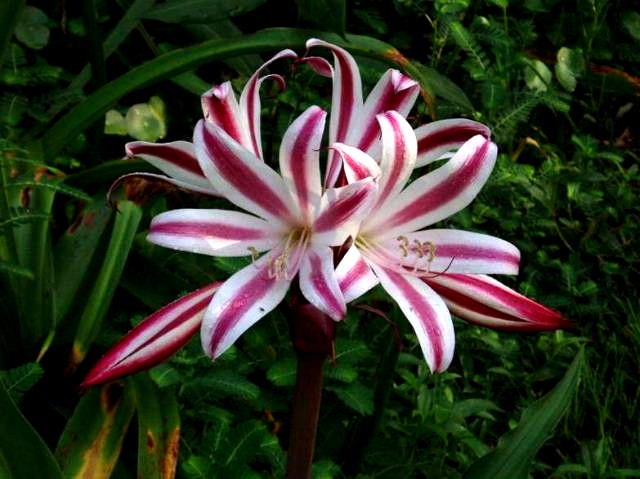
Crinum is a genus of about 180 species of perennial plants that have large showy flowers on leafless stems, and develop from bulbs. They are found in seasonally moist areas, including marshes, swamps, depressions and along the sides of streams and lakes in tropical and subtropical areas worldwide.
Description
Vegetative characteristics
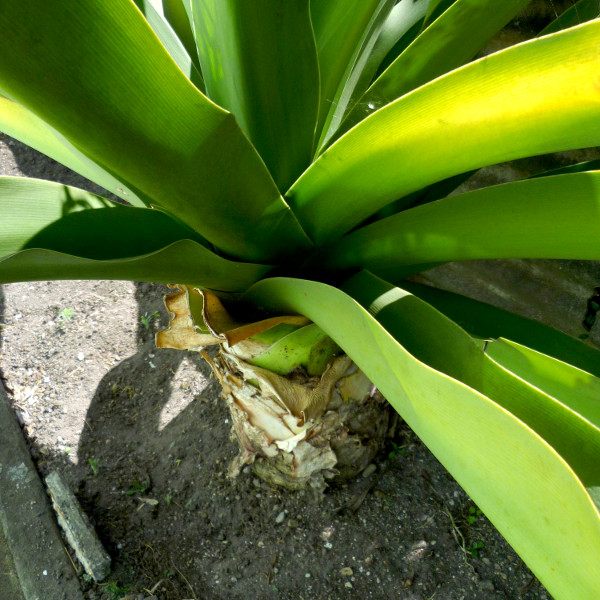
Crinum are bulbous perennial herbs with tunicate bulbs and basal, glabrous, annual to perennial leaves.
Generative characteristics
The bisexual, sessile or pedicellate, zygomorphic or actinomorphic flowers are borne one umbellate or solitary inflorescences with solid scapes.
Cytology
Cytological studies have shown that 27 species of Crinum are diploid, having a typical chromosome count of 2n = 22. Abilio Fernandes found that the Orange River Crinum bulbispermum had a count of 2n = 66, and some desert Crinum macowanii 2n = 44. These polyploid species produce seeds that are often parthenogenetic triploid or diploids, lack vigour and seldom grow to mature plants.
Taxonomy
It was published by Carl Linnaeus in 1753. The lectotype Crinum americanum L. was designated in 1923.
Species
As of July 2014, the World Checklist of Selected Plant Families lists 105 species of Crinum. Amongst these are:
- Crinum americanum L. – southern swamplily, seven sisters
- Crinum asiaticum L. – poisonbulb
- Crinum bulbispermum (Burm.f.) Milne-Redh. & Schweick. – hardy swamplily
- Crinum latifolium L.
- Crinum macowanii Baker
- Crinum moorei Hook.f.
- Crinum pedunculatum R.Br., syn. C. asiaticum var. pedunculatum – swamplily, river lily or spider lily
- Crinum thaianum Schulze – onion plant
- Crinum viviparum (Lam.) R.Ansari & V.J.Nair – Indian Subcontinent to Indo-China
Formerly placed here
- Agapanthus africanus (L.) Hoffmanns. (as C. africanum L.)
- Ammocharis heterostyla (Bullock) Milne-Redh. & Schweick. (as C. heterostylum Bullock)
- Cyrtanthus angustifolius (L.f.) Aiton (as C. angustifolius L.f.)
- Cyrtanthus elatus (Jacq.) Traub (as C. speciosum L.f.)
- Cyrtanthus obliquus (L.f.) Aiton (as C. obliquum L.f.)
- Hippeastrum argentinum (Pax) Hunz. (as C. argentinum Pax)
- Urceolina urceolata (Ruiz & Pav.) Asch. & Graebn. (as C. urceolatum Ruiz & Pav.)
Hybrids
- × Amarcrinum hybridised with Amaryllis
- C. × powellii (garden hybrid between C. bulbispermum and C. moorei) - pale pink, fragrant, lily-like flowers produced in late summer
- C. × powellii 'Album' (white flowered cultivar)
Etymology
The generic name Crinum comes from the Ancient Greek κρίνον (krinon), meaning lily, via the Latin crinum.
Uses
Several species are used in aquariums and in aquascaping. These include Crinum calamistratum, Crinum malabaricum, Crinum natans, and Crinum thaianum.
Gallery
See also
- List of plants known as lily
References
Bibliography
External links
- "Crinum" . Encyclopædia Britannica. Vol. 7 (11th ed.). 1911.
- Pacific Bulb Society Crinum Page, includes links to photographs
- Crinums In East Texas: Notes From Marcelle Sheppard, includes links to photographs, cultural information, and hybridizing results
- Bulbsociety
- The Genus Crinum
- African Crinums
- Bulb Society
- Juniper Level Botanic Garden Crinum Photo Gallery
- Crinum in West African plants – A Photo Guide.